

Keep K-Pop Korean!
An insight into how the genre profits from black culture
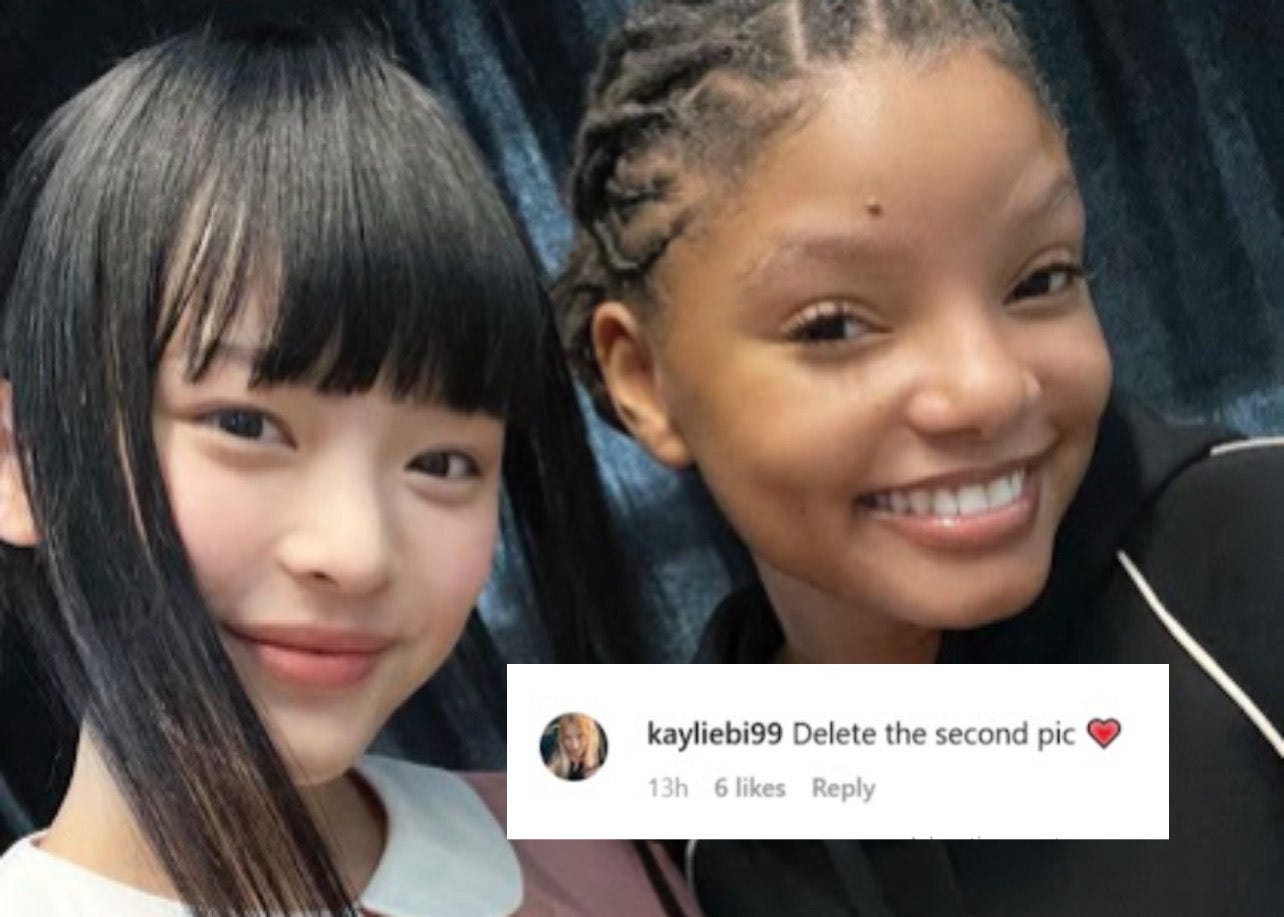
Not long ago, K-Pop fans angrily spammed that phrase on K-Pop group Le Sserafim’s Instagram page featuring a dark-skinned black model. It was also not long ago when Korean fans left rancid comments on a photo of New Jean’s Hanni and singer-actress Halle Bailey, calling the photo a perfect depiction of “heaven and hell” (Koreaboo, 2023), Hanni being the former. These situations, albeit a year apart, have a common factor. They all involve black people.
We cannot talk about K-Pop without mentioning the impact black culture has had on it. The 1st gen boy group Seo Taji and Boys are often accredited as the first ever K-Pop group since they have a big part in what K-Pop is today, being the catalyst for the Hallyu Wave. Featuring the future CEO of YG, Yang Hyunsuk, the group became known for combining popular American music with the Korean language. From first listen, it is apparent that they were heavily influenced by Rap and Hip-Hop, a genre pioneered by black people. Even their clothing and hair were reminiscent of the black youth of the 90s. The rebellious political messaging in their songs mirrored what was going on in the black community at the time. With their love of black culture, it would be a no-brainer to assume that they’d also appreciate and respect the people who created the culture that they’re heavily profiting from, however as we continue to find out in K-Pop, they never do.
We cannot “keep K-Pop Korean” when the very basis of the genre was inspired by Western music, specifically black music. It is seen in their mannerisms, their dancing, their raps, and even their hairstyles. The common argument against this statement is that these groups only take inspiration and put their own twist on it, an example being the group Seventeen. The issue is that there are only a few who do this. Before BlackPink and 2NE1, there was Swi.T. A three-member girl group under YG Entertainment, unlike their predecessors, they weren’t successful. Any chance of success was diminished when they released their single, “I’ll Be There”, the group and the company faced backlash because of how similar the music video was to TLC’s “No Scrubs”. There is no doubt that YG was inspired by the American girl group, from the set design and outfits. The issue is that the company did not try to add any sort of uniqueness to the concept and give the group some sort of individuality. This is still a current problem with YG Entertainment today, with Treasure’s rapper Hyunsuk who underwent a complete transformation into a caricature of black culture, even going as far as to call himself the “Korean Playboy Carti”. Despite being called out numerous times by his Korean and international fans, the rapper continues to culturally appropriate and take from black culture while disrespecting the people behind it.
It is more than the braids and the grills; it’s saying the n-word and replacing it with a ‘J’. It’s the fact that they continue to take from black culture whilst simultaneously disrespecting it. And when I say black culture, I don’t only mean American. We are seeing it happen with African music now, from the constantly underwhelming “Afro-inspired” music that these artists have been releasing. The essence of what made genres like Afrobeats and Amapiano stand out amongst other genres has been completely washed away and transformed into something generic. A similar occurrence happened with the Latin music craze from 2017-19. African music was popularised in Korea due to the likes of Burna Boy, Wizkid, Tems, and most recently Tyla. Eventually, K-Pop companies jumped on that trend as they always do when something becomes popular. January 27, 2023, saw the release of ‘Tinnitus’ by boy group Tomorrow by Together, a “multi-genre song filled with a(n) Afro-Pop rhythm” (Genius, 2023). On February 19, 2024, the girl group Le Sserafim released ‘Smart’, their take on the newly trending sound of Amapiano. Although these two songs are different sonically and thematically, they are similar in terms of how disingenuous they are to the two genres. When I discovered that not a single African person took part in the production process, I found my answer to the question of why it sounded like a poor imitation of African music.
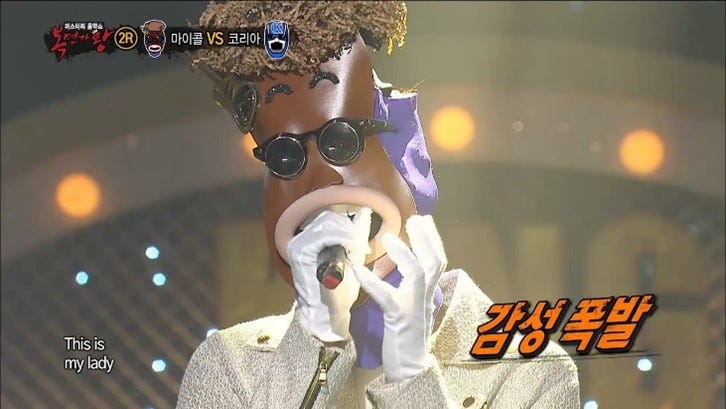
In late August of 2021, Korean Hip-Hop artist Penomeco collaborated with the British-Nigerian producer, London to release his single album, ‘Organic’, which contained two Afrobeat-inspired singles, ‘Bolo’ and ‘Shy (eh o)’. During the press release of the album the singer spoke about his interest in the genre and cited artists such as Burna Boy as his main inspiration and spoke about incorporating Nigerian languages such as Igbo and Yoruba into his lyrics. Many fans blame Penomeco for being the first Korean artist to kickstart this wave of ‘Afro-inspired’ Korean music that we’ve seen in the past three years. Between the release of ‘Organic2’ and the aforementioned EP, there has been a debate about whether Penomeco’s songs count as cultural appropriation with many black fans feeling uncomfortable with him putting on an African accent or even making Afrobeats as a non-African. On the other hand, many fans use him as an example of what they mean by cultural appreciation since he took the time to collaborate with a Nigerian producer and educated himself on the different sub-genres that exist under the ‘Afrobeats’ umbrella. It is hard to give singers like Penomeco their flowers for something as simple as researching the culture that they are profiting from since that should already be normalised in all industries. The phrase ‘cultural appreciation’ sits uncomfortably on my tongue when it comes to Penomeco especially since he consistently collaborates with artists who have openly shown their anti-blackness and have gotten away with it scot-free.
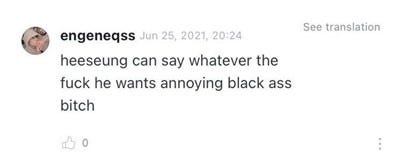
A common argument in defence of K-Pop artists using black culture is that at the end of the day, it is just music and fashion. Music transcends language and the artist showing interest in the culture shouldn’t be seen as something egregious. This argument treads a very dangerous line because while music does transcend language and to some it is just clothing, taking bits and pieces of that culture to turn into a caricature of it (e.g., calling dreadlocks “reggae hair” or Hip-Hop “ethnic hip”) is not them appreciating the culture. This also extends to K-Pop fans who excuse these idols’ behaviours by belittling black fans and often gaslighting them into thinking that they’re overreacting. When a fan confronted BlackPink’s Lisa during a fan call about wearing braids in the performance video of her song, ‘Money’, several blinks (the fandom name for the group) applauded the Thai singer for immediately apologising. However, many thought that her apology was pointless since it was not box braids (something she’d worn in the past). They turned on the black fans and went as far as calling it ‘Thai braids’ and that she was honouring her own culture, completely disregarding that Lisa owned up to being inspired by black hairstyles. Similarly, when Heesung from Enhypen said the ‘n’ word and black fans called him out expecting the fandom to be on their side, they were instead met with five days of intense racism from the fanbase that included posting lynchings of black people and demanding for it to be brought back.
Cultural appropriation in K-Pop, specifically of Black culture, has been a long-occurring issue. Many companies utilise genres such as Hip-Hop when they want to shed their groups of a certain image and/or want them to appear strong or rebellious, and often to appear sexier, an example being 4Minute who went from dance-pop songs like “Whatcha Doin’ Today?” to songs like “Crazy”. This image extends to their sound and the visuals displayed in the promotional photos and the music videos.
These darker concepts tend to include more rapping, and the idols are styled in outfits prominently seen in hip-hop culture (e.g., braids, grills, large gold jewellery, etc…). This practice is equivalent to non-black Western artists who use black culture to shed their previous image, for example, Miley Cyrus and Christina Aguilera. As they continue to pick and choose certain elements of black culture to portray a specific persona rooted in aggressiveness and sexualisation, they add to the persistence and perpetuation of the harmful stereotypes of black men and women.
This isn’t only synonymous with Hip-Hop. It is seen with other black-dominated genres such as Jazz and R&B. As Taeyang stated in this translated quote, “I’m not black, so I’ll probably have to have more experience and go through more pain if I want to express the sentiments, emotions, and soul that black people have through my music. That’s why I believe that pain and suffering will make my music richer.” He appropriates black people’s pain for his own financial gain and personal benefit, turning that suffering into a commodity. In the introduction of The Black Culture Industry, Ellis Cashmore (1997) writes that any residual menaces that still lurk in “African American practices and pursuits has been domesticated, leaving a black culture capable of being adapted, refined, mass-produced and marketed.” (Cashmore, 1997, p. 8) K-Pop has turned black culture into a superficial spectacle used to enhance or to cater to a certain image. Cashmore states that white people now appreciate black culture and buy into it, and the same can be said for K-Pop companies who view black culture as something marketable and gain millions by taking pieces of it.
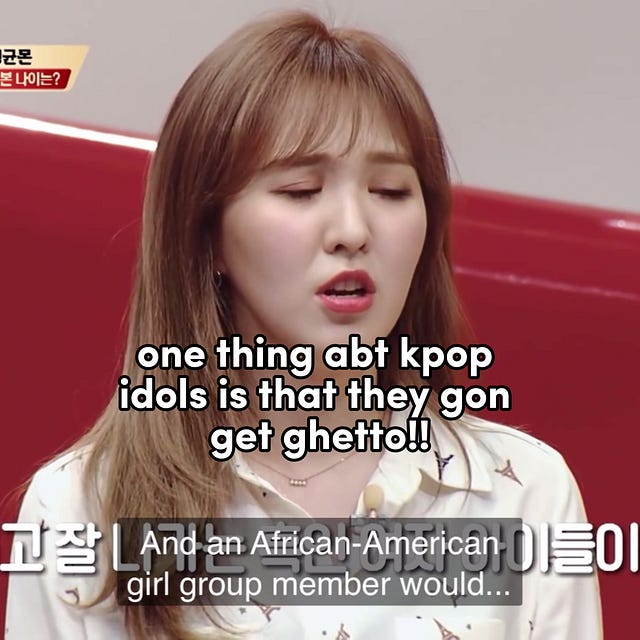
The main reason many black fans are turning away from K-Pop now more than ever is the inherent racism that occurs within Korean society. Koreans see themselves as ‘Han minjok’ (Korean race) and are known for their homogenous nature. It was only recently in the 1980s that the country became open to the idea of immigration and globalisation. This allowed Koreans to become exposed to genres such as Hip-Hop and opened doors for performers like Seo Taiji and Boys who helped commercialise Hip-Hop in South Korea. This commercialisation of black culture eventually spread to fashion, with several shops in Seoul selling shirts with images of rappers such as Tupac and Notorious B.I.G. However, unlike the black youth in the U.S. who wore these styles of clothing and who were primarily working class, these clothes were only accessible to the middle-class Korean youth simply because they could afford them. In Korea, black culture is something that can only be bought, it is not a lived experience. They will never understand the social impact of black culture because it has never affected them. This is why they continue to culturally appropriate through music and style, profiting off the culture through K-Pop and K-Hip-Hop. It is also why the country still allows clubs in Itaewon, a city that is known for being a hub for foreigners, to enact a Koreans-only policy with a slight leniency to biracial Koreans that can prove their nationality. And that is why they continue to denigrate black people, with artists such as Mamamoo who performed Uptown Funk by Bruno Mars in blackface and Wendy of Red Velvet who did multiple harmful imitations of black women. And Wendy, being a Canadian, would have been taught the struggles and racism black people constantly experienced. As a black fan, it is hard to support an industry that does not respect your race or worse, claims to respect it but then proceeds to make a mockery of it.
Therefore, I reiterate that we cannot ‘keep K-Pop Korean’ since the genre has never been a singular entity. The very being of the genre relies on the Western sound and what many fans attribute to K-Pop (the flashy attires, the catchy lyrics, and the choreographies) has long existed in pop music. The Hip-Hopification of K-Pop shows the lack of research these companies do on the genre since they only pick bits and pieces of black culture that fit an image or concept. What many people say sets K-Pop apart from other genres is their focus on choreography and visuals, and while it is true that K-Pop is more dance-focused, those choreographies are usually inspired by black culture and most times created by a black person. Without black culture, there is no K-Pop and with the industry using black people as a foundation, they have created a long-lasting link between the two that as the years go by, becomes increasingly harmful for black fans.
 Tiktok failed to load.
Enable 3rd party cookies or use another browser
Sources:
Angela. (2016, 12 20). Fetishizing Black Culture: Taeyang on Being Black. Retrieved from Seoulbeats: https://seoulbeats.com/2016/12/fetishizing-black-culture-taeyang-on-being-black/
Bryant, D. (2021, October 19). The Commercialization of Black Hip-Hop and Rap Culture in K-Pop. Retrieved from Five Cent Sound: https://5centsound.com/blog/the-commercialization-of-black-hip-hop-and-rap-culture-in-k-pop
Camara, S. (2021). Korean Pop Music and the Appropriation Music and the Appropriation of Hip-Hop Culture: How. Retrieved from Bard Digital Commons: https://digitalcommons.bard.edu/cgi/viewcontent.cgi?article=1272&context=senproj_s2021
Cashmore, E. (1997). The Black Culture Industry. Retrieved from https://api.pageplace.de/preview/DT0400.9781134809387_A24611824/preview-9781134809387_A24611824.pdf
Genius. (2023, January 27). Genius English Translations – TOMORROW X TOGETHER - Tinnitus (Wanna be a rock) (돌멩이가 되고 싶어) (English Translation). Retrieved from genius.com: https://genius.com/Genius-english-translations-tomorrow-x-together-tinnitus-wanna-be-a-rock-english-translation-lyrics
Koreaboo. (2023, March 22). International K-Pop Fans Call Out Racist And Hateful Comments Directed At Halle Bailey On NewJeans’ Instagram. Retrieved from Koreaboo: https://www.koreaboo.com/news/international-kpop-fans-call-racist-hateful-comments-directed-halle-bailey-newjeans-instagram/
X.com. (2021, June 28). Retrieved from X: https://x.com/ENbackup_/status/1409625296580452360/photo/1
The typical steal the culture but hate the provider. I'm not into kpop myself, but my friend was once a *huge* kpop fan (ie, I was heavily spammed) so I had the ability to know kpop without holding a bias or favour towards anyone in particular. That being said I noticed that kpop lovers are willing to bend over backwords for their favourite artists even when it was incredibly difficult to defend them which ultimately comes from the bias they hold. I'm glad to learn there is an initiative being made to diversify kpop while still keeping it "kpop". Hopefully the black community will finally get the credit and appreciation they deserve. Thank you for sharing, this was both a fun and enlightening read :)